
Canine Fitness Is for Every Dog (Yes, Even Yours)
April is National Canine Fitness Month, and if your first reaction to that is "that's not really for my dog," you're not alone. When most people hear "canine fitness," a specific image comes to mind: a border collie flying through an agility course, or a Belgian Malinois in performing working dog tasks. It looks impressive. It also looks like it has nothing to do with you or your dog.
Here's what that image gets wrong.
Canine fitness isn't a sport. It isn't a certification program. It isn't something reserved for working dogs or competitive athletes. It's simply intentional movement that supports your dog's body and brain, and it benefits every dog, including yours.
So What Does "Canine Fitness" Actually Mean?
Think of canine fitness the way you'd think of your own fitness: not as a specific sport or regimen, but as any purposeful physical activity that keeps your body strong, mobile, and feeling good. For dogs, that means exercises that build muscle, improve coordination and balance, develop body awareness, and support healthy joints.
The American Kennel Club describes canine conditioning as movement that "can build and maintain muscle mass, improve body awareness and balance, and provide a physical and mental workout," noting that while athletes benefit, so do senior dogs, couch potatoes, and puppies.
Every dog, regardless of age, breed, or current fitness level, has a body that benefits from intentional movement. The dog who sleeps on the couch all day. The senior dog with creaky hips. The anxious rescue who's still figuring things out. The perfectly healthy three-year-old who just needs more to do. All of them.
The Physical Benefits, in Plain Language
You don't need a degree in biomechanics to understand why this matters. Here's what regular intentional movement actually does:
Stronger muscles protect joints over time, reducing the risk of injury and easing the effects of arthritis as dogs age. This is especially relevant for large breeds, dogs with known orthopedic concerns, and our senior pups.
Movement also changes how dogs navigate the world. Researchers at the Penn Vet Working Dog Center have studied canine physical fitness extensively, noting that dogs naturally carry about two-thirds of their weight on their forelimbs, which can lead to underdeveloped hindlimb and core muscles over time. Targeted movement addresses exactly that imbalance.
Then there's body awareness and coordination. Proprioception, your dog's sense of where their body is in space, is developed through the kinds of slow, thoughtful movement that canine fitness emphasizes. A dog with good body awareness is more confident, more agile, and less likely to get hurt doing everyday things like jumping in and out of the car.
And for dogs carrying a few extra pounds, building muscle increases metabolic rate, which supports long-term weight management in ways that walks alone often can't.
The Mental Benefits Are Just as Real
Physical fitness and mental wellbeing aren't separate for dogs any more than they are for us.
Exercise releases endorphins, which promote feelings of calm and contentment. But canine fitness goes a step further, because it also gives dogs a job. Learning a new exercise, figuring out how to balance on an unfamiliar surface, following a sequence of movements: all of that is mental work. It asks the brain to focus and problem-solve, which is one of the most effective ways to reduce anxiety and over-arousal.
Research from Tufts University and the Center for Canine Behavior Studies found that participation in dog sports and structured physical activities was among the most effective interventions for dogs with generalized anxiety. The study followed 1,308 dogs and found that mental stimulation and structured activity outperformed many other common approaches.
In plain terms: if your dog is reactive, restless, or hard to settle, purposeful movement isn't just good for their body. It may be one of the most effective things you can do for their state of mind.
You don't need to enroll in dog sports to get this benefit. Even five to ten minutes of focused movement at home, exercises that ask your dog to think while they move, can make a meaningful difference in how settled and content they feel.
You Don't Need Fancy Equipment or Hours of Time
This is the part that stops most people before they start. They assume canine fitness requires a specialized gym, a certified instructor, and a significant time commitment. None of that is true.
Some of the most effective exercises use things you already have at home:
- Fold a towel into a low ridge and have your dog step over it slowly. That's a body awareness exercise.
- Find a low curb and ask your dog to put their front paws on it. That's an elevated stand, one of the foundational moves in canine fitness.
- Take a five-minute slow sniff walk where your dog leads the direction and gets to follow their nose. That's structured enrichment that works the brain.
- Ask your dog to move slowly through a sit, a stand, and a down, a few repetitions at a time. That's a muscle-building exercise the AKC calls "puppy push-ups," and it works for dogs of every age.
The principle here is simple: something is always better than nothing. Five minutes of intentional movement done consistently will do more for your dog than an occasional long session followed by days of nothing. Consistency, not duration, is what creates change.
Where Blue-9 Tools Fit In
If the towel and the curb are your starting point, great. That's genuinely enough to begin. But if you find yourself wanting more structure, more variety, or tools that are built to grow with your dog, that's where Blue-9 equipment comes in.
The KLIMB and KLIMB Jr. are raised platforms that give your dog a clearly defined space to work, which builds focus and body awareness at the same time. The KLIMB can be used as a standard elevated platform, configured as a ramp to build confidence on inclines, or set up with the short leg accessory as a wobble board for balance work.
The Propel Air Platform is an inflatable fitness tool, think of it as a Bosu ball for dogs. It creates a slightly unstable surface that asks your dog's muscles to work harder to maintain balance, which engages the core, builds proprioception, and increases confidence on unfamiliar surfaces. It works as a standalone exercise station and pairs with the KLIMB for more advanced movements like the plank hold, where front feet are elevated on one surface and back feet on another.
These tools aren't a requirement to get started. But they do give you more to work with as your dog progresses, and they're built to grow with your dog from beginner exercises all the way to advanced conditioning work.
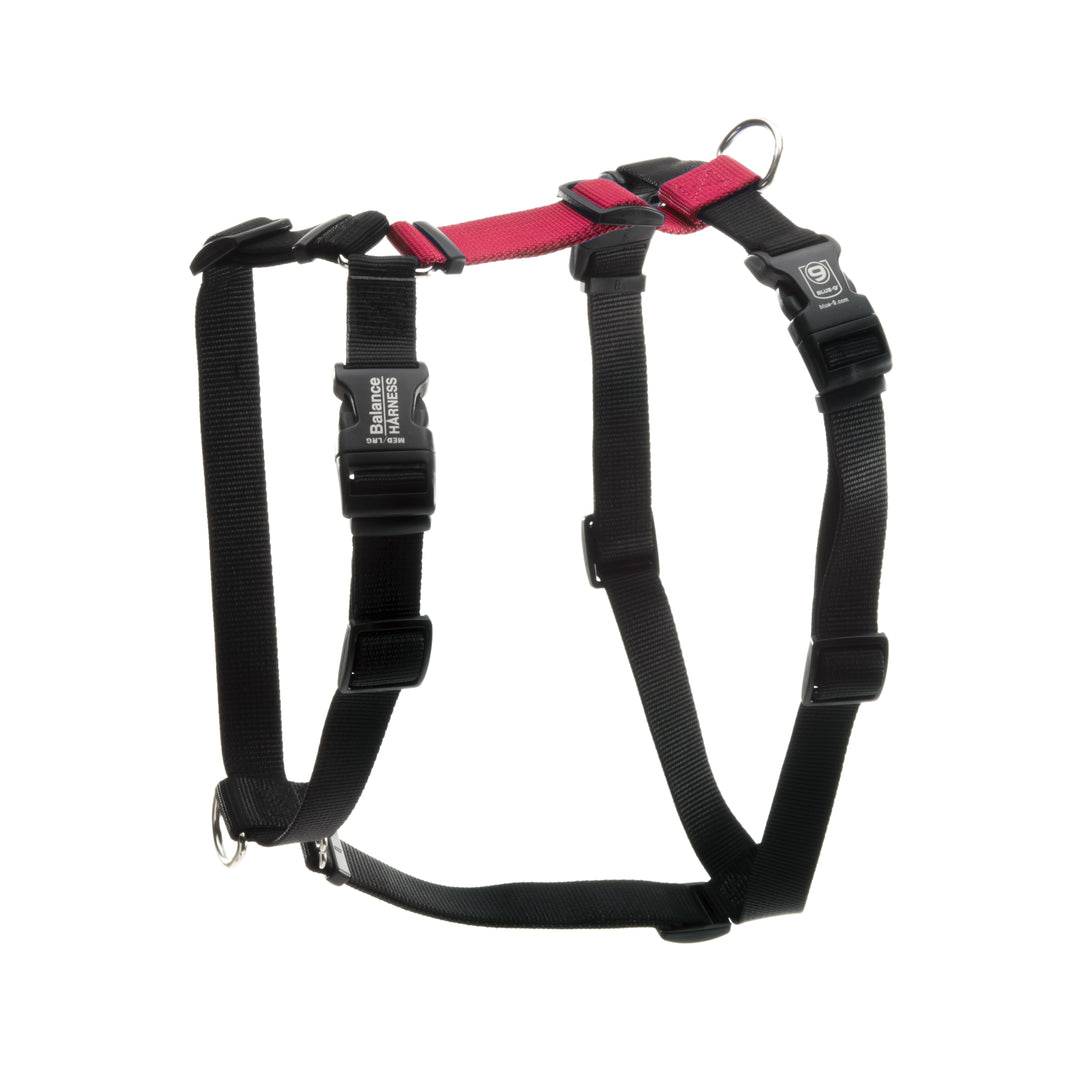
The Balance Harness supports the fitness work that happens outside: walks that let your dog move freely, without restriction on their shoulders or joints, so every walk becomes a better workout.
Start With One Thing This Month
That's what Canine Fitness Month is really about. Not intensity. Not perfection. Not a complete overhaul of your routine. It's a full month dedicated to one idea: that intentional movement matters for every dog, and that starting is easier than most people think.
Wherever you and your dog are starting from, there's something here for you. We'll be sharing exercises, ideas, and inspiration all month long to help you build movement into your dog's life in ways that actually stick.
Try one thing this week. Notice how your dog responds. Then try something else next week. That's canine fitness. And that's what this whole month is for.
Ready to go a little deeper? Our Foundation Fitness digital course was built for exactly this moment. It walks you through five foundational fitness behaviors step by step, so you and your dog can build real confidence before you ever worry about what comes next.
Looking for inspiration? We're sharing a free April Fitness Inspiration card later this month with 12 simple moves to try this month. Follow along on Instagram and Facebook so you don't miss it. And when you try something with your dog, share it. Tag us @blue9petproducts so we can cheer you on.
Sources
American Kennel Club: Easy Exercises for Canine Conditioning https://www.akc.org/expert-advice/training/exercises-canine-conditioning/
Penn Vet Working Dog Center: The Fit to Work Program, Frontiers in Veterinary Science https://www.frontiersin.org/journals/veterinary-science/articles/10.3389/fvets.2020.00470/full
University of Portsmouth: The Surprising Benefits of Group Exercise for Anxious Dogs (covering Tufts University / Center for Canine Behavior Studies research) https://www.port.ac.uk/news-events-and-blogs/blogs/improving-health-and-wellbeing/the-surprising-benefits-of-group-exercise-for-anxious-dogs
Explore more
Share this