
How to Get Great Outdoor Dog Photos This Summer
You pull out your phone. Your dog is doing something ridiculously cute, sitting on a rock at the top of a trail, ears up, the whole world behind them. You take 30 photos. You get one blurry shot of the back of their head, a few where they've already moved, and one where the sun has completely blown out the background.
Summer is one of the best times to make memories with your dog. A few small adjustments to how you set up the shot can go a long way, and none of them require anything beyond your phone.
Start at Home Before You Ever Pull Out Your Phone
The dogs that photograph well outside have usually had a little practice first. Not a formal training program, just some repetition at home that teaches them what holding still actually means.
Grab some treats your dog loves and head to your KLIMB. Cue your dog to get on it, a simple word like "climb" works well, and reward them the moment they step up. Then cue them to sit, and reward that too. Now you have a dog who is on a raised surface, sitting, paying attention, and motivated to stay there.
From there, start building in your camera. Take a practice photo and reward your dog for holding still through it. One photo, one treat. Gradually stretch the time, two photos before the reward, then three. You're teaching them that staying put while you point a phone at them is worth their while.
Once that feels solid at home, take your KLIMB outside to a quiet spot in your yard or a calm area nearby and run through the same routine. Same cue, same rewards, new environment. This is the step most people skip, and it's the one that makes everything else easier.
Now when you're out on a trail or at one of your favorite spots, you have something to work with. Find a flat rock, a low wall, a fallen log, anything that resembles a platform, and use that same "climb" cue. Have your treats ready, reward your dog for getting on it, and reward them again for holding still while you take your shot. They already know this game. You're just playing it somewhere new.
Stop Shooting in Direct Midday Sun
Direct overhead sunlight is the most common reason outdoor dog photos come out flat, washed out, or full of harsh shadows. Summer makes this worse because the sun is higher and stronger.
Shoot in the early morning or late afternoon instead. The light is warmer, softer, and far more flattering on your dog and on whatever's behind them. Overcast days are also underrated. A cloud cover acts like a natural diffuser, giving you even light with no effort. Some of the best outdoor dog photos happen on gray days.
Get Down to Their Level
Most phone photos of dogs are taken from standing height, which means shooting slightly downward. It makes dogs look small and disconnected from their environment.
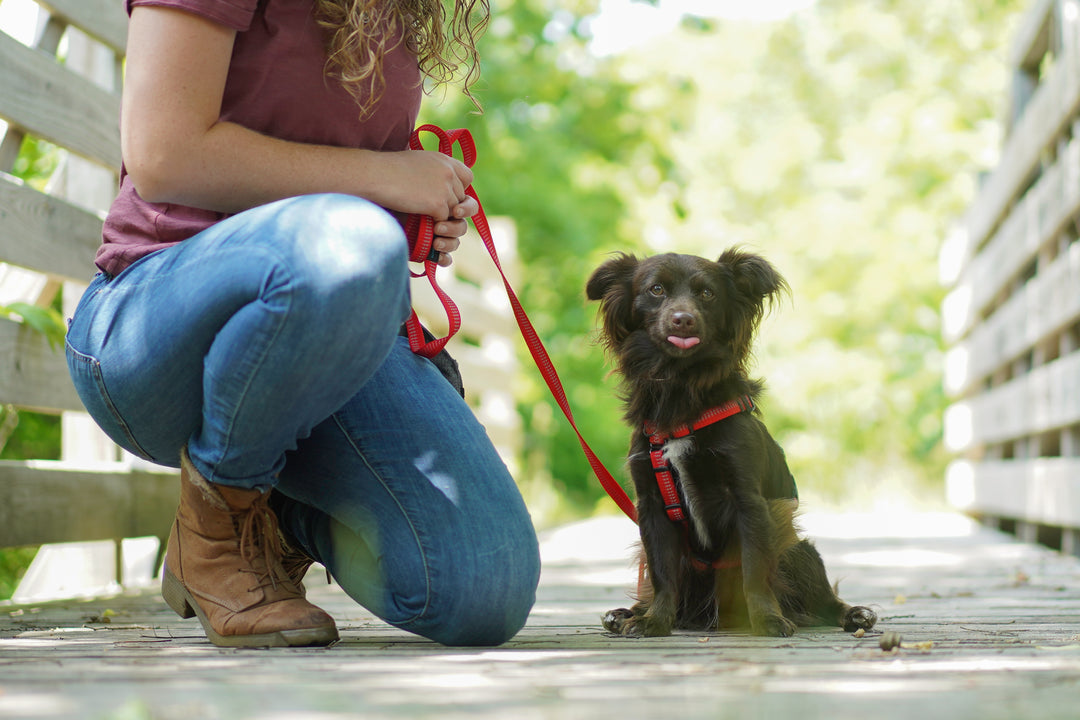
Crouch down or sit on the ground. Get to eye level or slightly below it. This puts your dog's face and eyes at the center of the frame instead of the top of their head, and it shows the world from their perspective, which is almost always more interesting than yours.
Eye contact with the camera, shot from eye level, is what makes a photo feel like it has a real subject. It's a small change with a noticeable result.
Use Portrait Mode With Space Behind Your Dog
Portrait mode on a modern smartphone blurs the background slightly and makes your dog stand out from the frame. It works well and most people underuse it outdoors.
One thing to know: portrait mode needs space between your dog and whatever is behind them. If they're standing against a fence or a hedge, it struggles. Find a spot with open space behind your subject, a trail, a field, open water. Three or four feet of clearance is enough to make the mode work properly.
Let Them Burn Energy First
A dog who arrived somewhere new and is still wound up is not going to cooperate. Give them 10 to 15 minutes to explore, sniff, and settle before you pull out your phone. A dog who has taken the edge off is calmer, more focused, and significantly easier to photograph.
A good summer photo of your dog doesn't require perfect timing or a miracle moment. It mostly requires setting your dog up to succeed before you ask them to hold still. Build the behavior at home, transfer it outside, get low, shoot in good light, and let them show you who they are.
Share this