
What Your Dog Is Trying to Tell You on Walks
You've seen it happen. The second you clip on the leash, your calm, sweet dog transforms. They pull toward every lamppost, bark at the dog across the street, stop dead in the middle of the sidewalk, or drag you forward like they've completely forgotten you exist.
It's easy to interpret all of this as stubbornness, bad manners, or just "how they are." But most of it is actually communication. And once you know how to read it, walks start to make a lot more sense.
Here's what the science says about what your dog is really trying to tell you on walks, and what it means for how you can help.
Why Does My Dog Act Differently on Walks Than at Home?
Dogs behave differently on walks because the outdoor environment is an entirely different sensory experience from home. The stimulation level, the smells, the sounds, and the unpredictability of the outside world all demand a different kind of processing from your dog's brain.
Dogs have up to 300 million scent receptors, compared to roughly six million in humans, and devote approximately 40 times more brain volume to decoding smells than we do. They are not just sniffing a fire hydrant. They are reading a detailed record of who passed by, when, and what kind of mood they were in.
Certified dog trainer Staci Lemke, CPDT-KA, RVT, puts it plainly: "Humans are more about the destination. Dogs are more about the journey."
This is the first and most important thing to understand about walk behavior: your dog is not being difficult when they stop to investigate something. They are doing exactly what their brain is designed to do, gathering and processing information about their environment. The walk you are on and the walk they are on are genuinely, neurologically different experiences. When we rush past all of that, we are not just shortchanging their enjoyment. We are cutting off something that matters deeply to their well-being.
Why Does My Dog Pull on the Leash?
Leash pulling is almost always a sign of high arousal. A dog who pulls is highly activated, excited, overstimulated, or desperately trying to reach something they find interesting or important. It is rarely about dominance, and it is not a character flaw.
Here is the part most owners do not realize: that arousal level is often set long before you leave the house.
When dogs spend hours without meaningful mental engagement, energy and anticipation quietly build up. The walk becomes their one big event of the day, their pressure-release valve. When that pent-up energy finally has an outlet, everything becomes overwhelming and exciting at once.
Dogs that are constantly rushed or corrected for sniffing may become more frustrated and pull harder. Sniffing is not just a distraction from walking. It is one of the primary ways dogs decompress and regulate their own nervous system. When we block it, we remove their most powerful self-regulation tool.
The fix is not always more leash corrections. Sometimes it is more sniffing.
Why Does My Dog Stop to Sniff Everything on Walks?
Your dog stopping to sniff is not a problem behavior. It is healthy, necessary, and one of the most calming things a dog can do.
Research by animal cognition expert Dr. Alexandra Horowitz demonstrated that dogs permitted to sniff freely during walks showed lower cortisol levels, the hormone associated with stress. A separate 2019 study by Duranton and Horowitz, published in Applied Animal Behaviour Science, found that nosework induces a more positive emotional state in dogs, essentially making them more optimistic.
According to Lauren Fries, Shelter Behavior Services Supervisor at the Animal Humane Society, "Sniffing activates many parts of a dog's brain, releasing the pleasure hormone dopamine and promoting rest, thereby helping to reduce stress."
What that means in practice: when your dog stops to investigate a patch of grass for two full minutes, their brain is working hard, processing complex information, and actually winding down in the process. Twenty minutes of focused sniffing can be as mentally tiring, and as calming, as a much longer physical walk.
When your dog plants their feet and refuses to move, sometimes that is stubbornness. But often it is a dog who has found something genuinely important and is asking, in the only way they can, for a little more time.
Why Does My Dog Bark and Lunge at Other Dogs or People?
Barking and lunging are almost always driven by fear or frustration, not aggression or dominance. Your dog is not acting out. They are overwhelmed.
When dogs are on a leash, they are vulnerable. If they are stressed, anxious, or fearful and cannot respond in ways that are instinctive and natural to them, such as moving away or creating distance, they communicate in the only ways left to them. That communication looks like barking, lunging, and pulling.
The leash changes everything. Off leash, a dog who feels uncomfortable can curve away, create distance, or disengage. On leash, those options disappear. When a dog cannot move away from something that scares or overwhelms them, barking and lunging become the only tools they have left.
Attempting to punish reactive behaviors may worsen them. When punishment is paired with an already-stressful trigger, dogs can learn to associate the trigger with more negativity, not less. What looks like defiance is almost always a dog asking for help.
Why Does My Dog Suddenly Stop or Try to Turn Around on Walks?
When a dog stops suddenly, changes direction, or tries to move away from something on a walk, they are telling you their comfort level has dropped. This is one of the clearest and most underused forms of dog communication.
Dogs are constantly scanning their environment for things that feel safe or unsafe. A sudden stop usually means they have spotted or sensed something their nervous system has flagged as worth paying attention to, another dog, an unfamiliar person, a loud noise, or something that simply does not feel right.
The behaviors that come before these moments are usually subtle. Dog trainers call these "calming signals," a dog's early language for "I'm not sure about this." Lip licking, yawning when they are not tired, looking away, a slight stiffening of posture. These are all attempts to self-soothe and communicate discomfort before things escalate.
If you catch these signals early, you can give your dog what they actually need: a little more space, a change of direction, or a moment to collect themselves. If those signals go unread, the barking and lunging often follow.
How to Help Your Dog Have Better Walks
Better walks come from understanding what your dog is communicating, then responding in ways that meet their actual needs. Here are the most impactful shifts you can make:
Let them sniff more than you think they need to. This is the single most underutilized walk tool available. A dog who gets meaningful sniff time is a dog whose nervous system has a chance to regulate.
Notice the small signals before the big ones. Lip licking, yawning, sudden stiffness, avoiding eye contact. These are yellow lights. Pay attention to them and you can often prevent the red ones.
Give them space when they ask for it. A dog trying to move away from something is doing the right thing. Support that, do not override it.
Think about what happens before the walk, too. A dog who has had mental engagement at home, such as scent games, platform work, or a food puzzle, walks out the door in a fundamentally different headspace than one who has been bored and restless for hours.
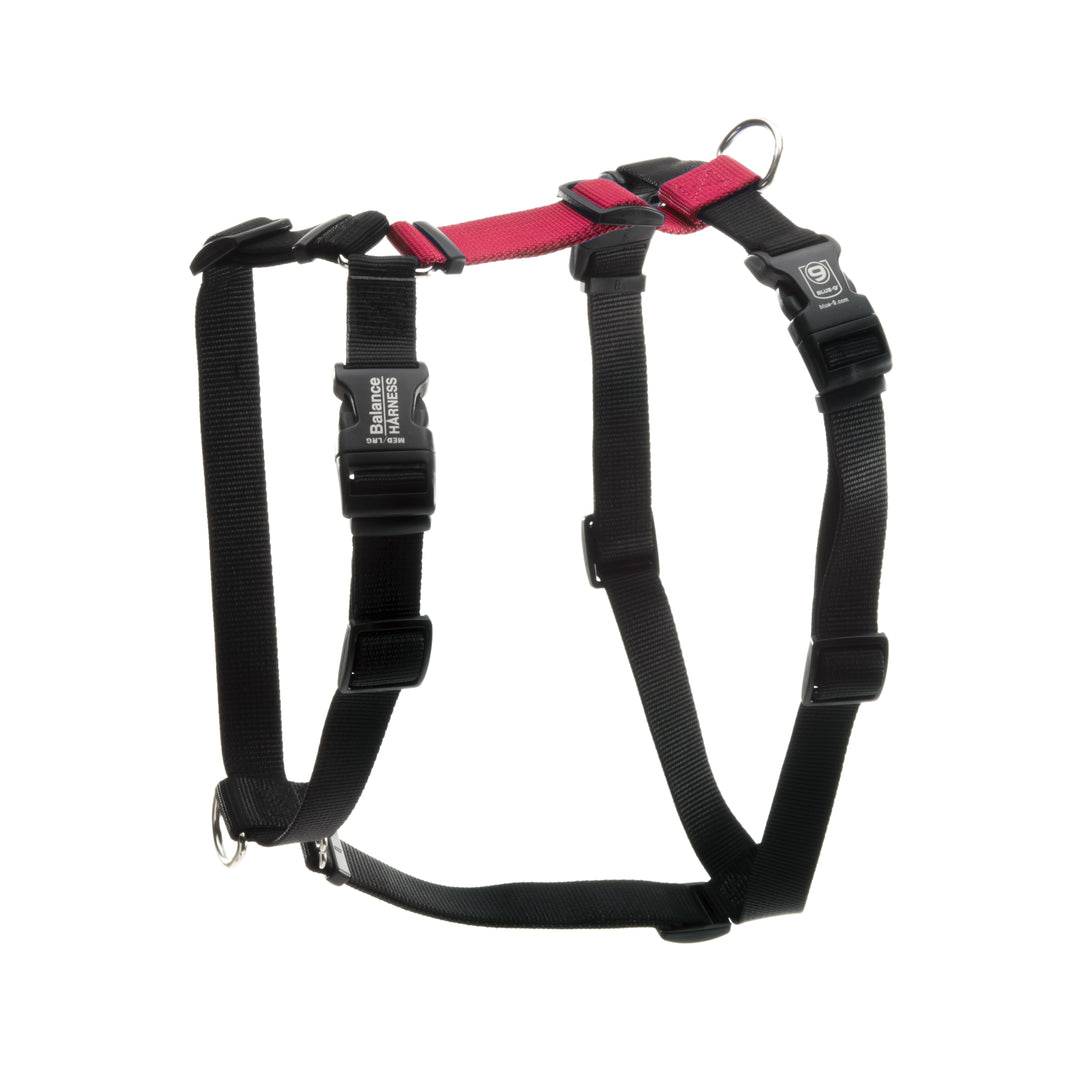
Make sure your gear is not adding to the problem. A harness that pinches, restricts movement, or fits poorly adds physical discomfort to an already stimulating experience. The Blue-9 Balance Harness is designed to move with your dog's body, with no pressure on airways, joints, or armpits, and adjustable in six places for a fit that actually works. When a dog is physically comfortable, they have one fewer thing to communicate distress about.
The Bottom Line
Your dog is talking the whole time you are on a walk. They are telling you what is interesting, what is scary, what they need more of, and what is pushing them past their limit.
Walks that feel like battles are usually dogs who do not feel heard. Walks that feel easy are usually dogs whose needs, to sniff, to move at their own pace, to have space when they need it, are being met.
You do not need a perfect dog to have a good walk. You just need to start listening.
Want to support calmer, more connected walks? The Blue-9 Balance Harness is designed to work with your dog's body, not against it, so you can focus on each other instead of fighting the gear. And for enrichment tools that help set your dog up before you ever reach the door, explore the KLIMB Training Platform and Propel Air Platform.
Frequently Asked Questions About Dog Walk Behavior
Why does my dog pull so hard on the leash? Leash pulling is most commonly caused by high arousal and excitement, not dominance or bad behavior. Dogs who haven't had enough mental stimulation before a walk often release all of that built-up energy the moment they step outside, which shows up as pulling. Allowing more sniffing time and building in pre-walk enrichment can make a significant difference.
Why does my dog bark at other dogs on walks? Most dogs who bark at other dogs on leash are experiencing fear or frustration, not aggression. Being on a leash removes a dog's ability to create distance from things that feel threatening, so barking and lunging become their only outlet. This is called leash reactivity and it responds well to increased space, calm handling, and positive reinforcement.
Is it okay to let my dog sniff on walks? Yes, and it is actually beneficial. Sniffing releases dopamine, lowers cortisol, and provides meaningful mental stimulation. Research shows that dogs who are allowed to sniff freely during walks show lower stress levels than dogs who are walked at a brisk pace without sniff breaks. Twenty minutes of sniff-focused walking can be as tiring as a much longer exercise walk.
Why does my dog act differently on walks than at home? The outdoor environment is far more stimulating than home. Unfamiliar smells, sounds, other dogs, moving vehicles, and unpredictable people all require your dog's brain to work much harder. Dogs who seem calm and well-behaved indoors may appear distracted, anxious, or reactive outside simply because they are processing a much higher volume of sensory information.
What are calming signals in dogs? Calming signals are subtle behaviors dogs use to communicate stress or discomfort before it escalates. Common examples include lip licking, yawning when not tired, looking away, sniffing the ground suddenly, and softening or stiffening posture. Learning to recognize these early signals gives you the chance to respond before a walk situation becomes difficult.
Does a harness help with leash pulling? A well-fitting harness can reduce pulling by improving comfort and movement freedom. Harnesses that restrict shoulder movement or dig into a dog's armpits can actually cause more pulling because the discomfort creates tension. A properly fitted harness that moves with the dog's natural gait supports calmer, more relaxed walking.
Explore more
Share this